Small Object Surface Detection for Mobile AR
A lightweight, depth-only pipeline for detecting small planar surfaces in augmented reality
Overview
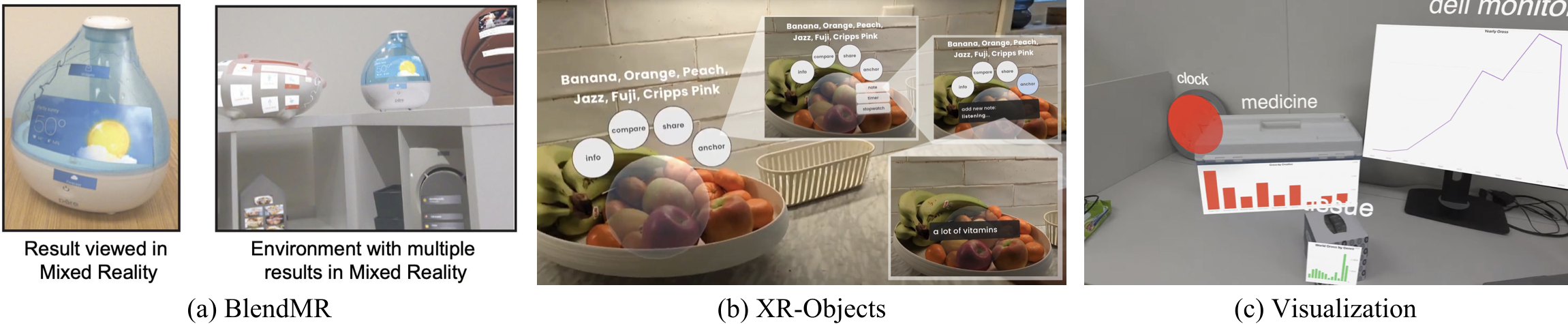
Current AR systems rely on global RANSAC-based plane detection, which captures large surfaces (floors, walls, desks) but misses small object-level planes like book tops, box lids, and monitor stands. Detecting these small surfaces matters because it lets AR anchor content to individual objects rather than only to rooms: a label on top of a box, a virtual widget resting on a book, or interaction feedback placed directly on the object a user is touching. This enables richer, object-centric AR experiences.
My Role
- Project Lead: Defined the problem and designed the clustering-before-fitting pipeline
- Implemented the pipeline on Meta Quest 3 depth data and ran the evaluation
Approach
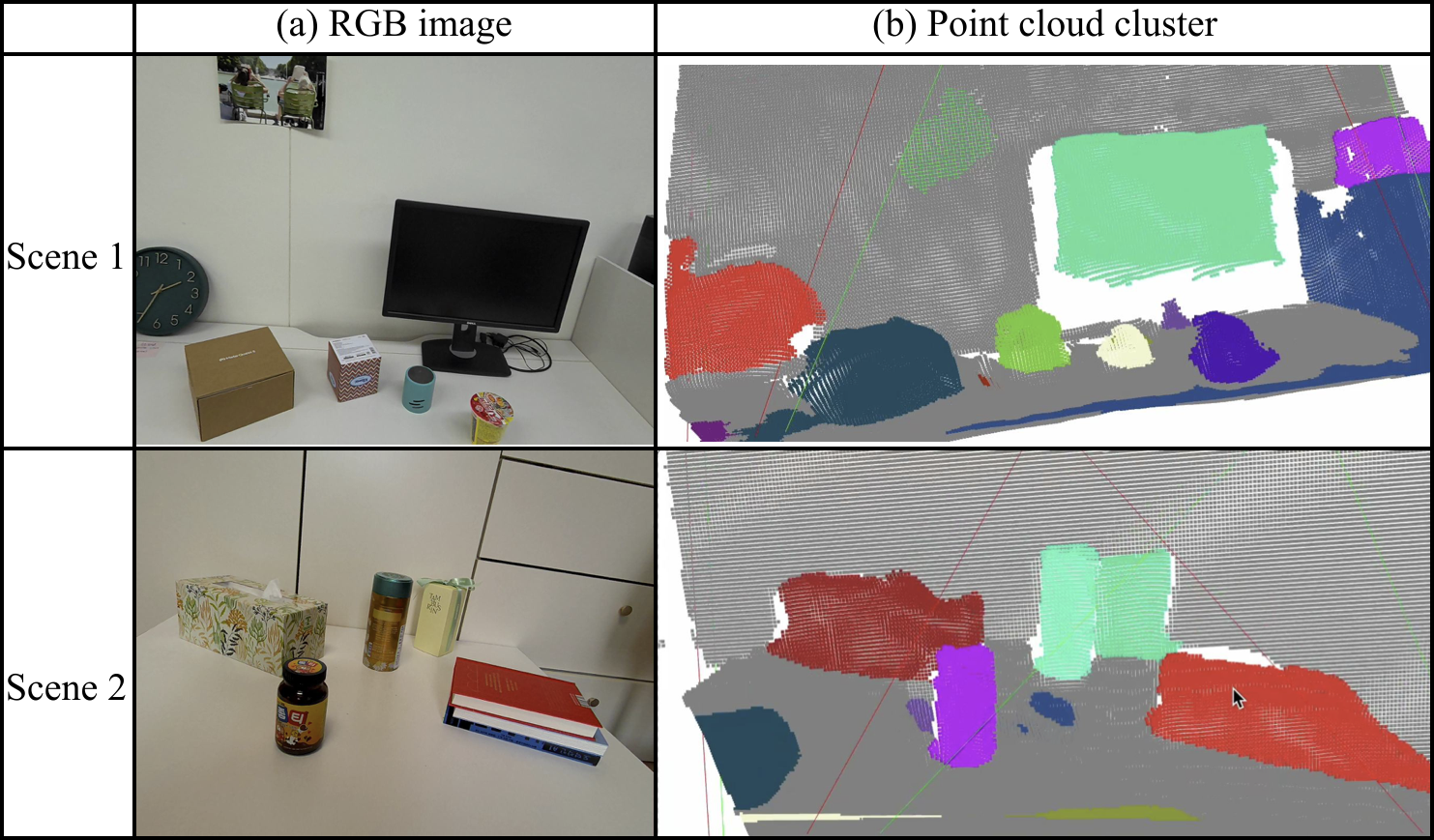
Key insight: by isolating object-level clusters before plane fitting, small planes become locally dominant within their clusters—making them detectable without semantics, RGB, or neural networks.

- Raw depth acquisition from Meta Quest 3 stereo sensors
- World point cloud reconstruction
- Dominant plane removal (floors, walls, desks)
- Object-aware DBSCAN clustering
- Per-cluster RANSAC with multi-scale thresholds
Results
| Method | Plane Recall (Scene 1) | Plane Recall (Scene 2) | Runtime |
|---|---|---|---|
| Baseline (Global RANSAC) | ~0.14 | ~0.10 | 0.39–0.63s |
| Ours (Single-scale) | 0.71 | 0.71 | 0.54–0.99s |
| Ours (Multi-scale) | 0.79 | 0.86 | 0.75–0.92s |
Plane recall improves 5–8× over the global baseline, at the cost of a modest runtime increase.
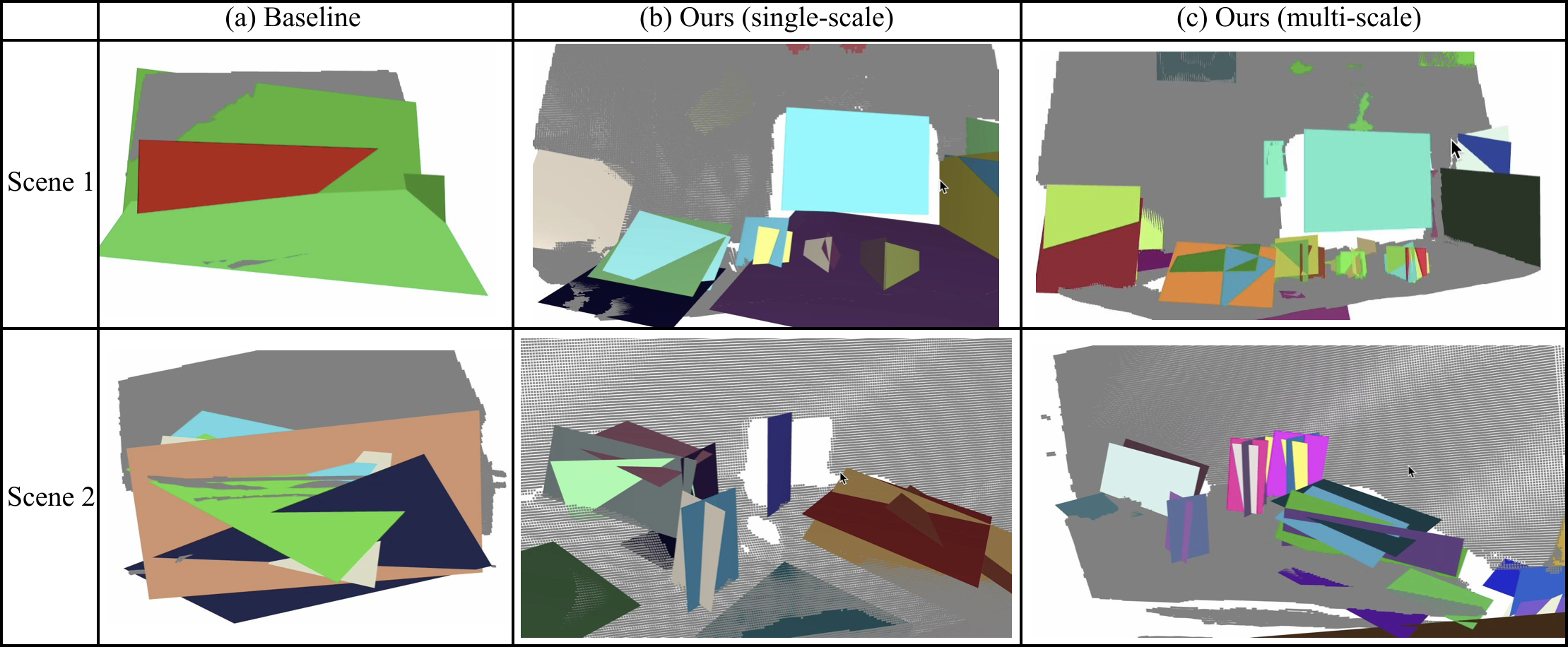
A depth-only, geometry-only approach can recover small-object surfaces for mobile AR without dense reconstruction or learned models, enabling richer object-centric interactions on commodity hardware.